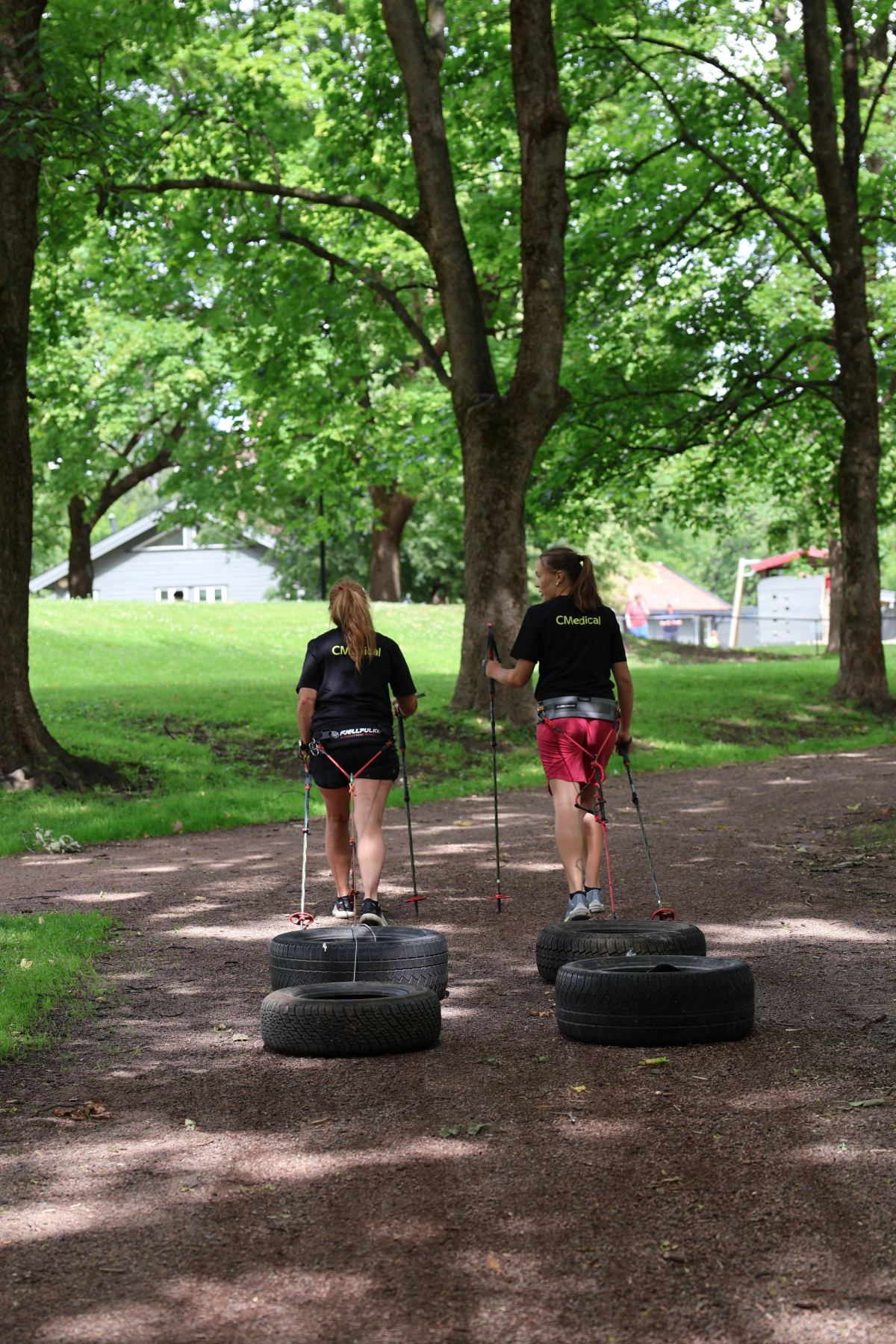
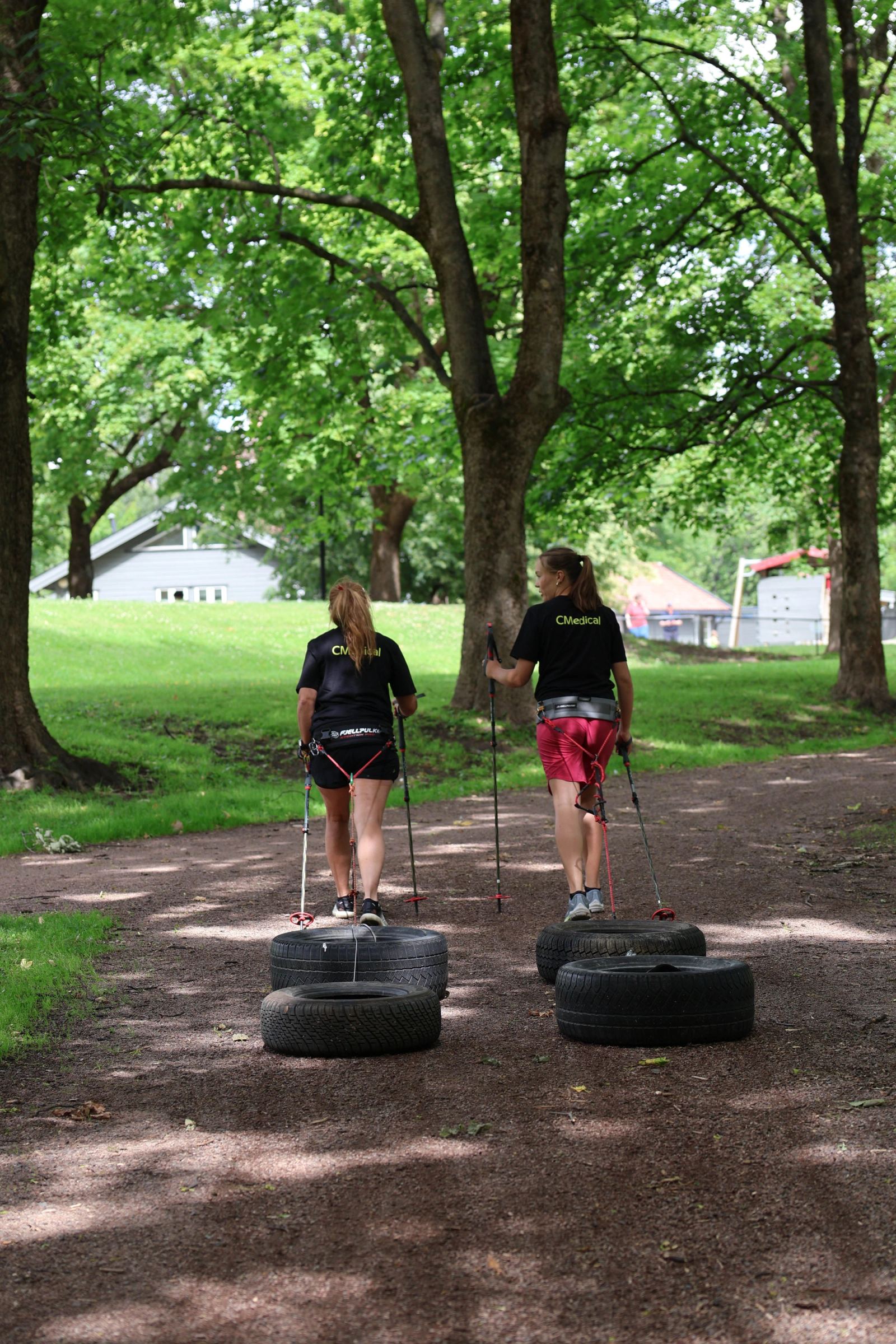
Etter to år med intense smerter tross tidligere kirurgi måtte Emma «Mini» Gyllenhammar starte helt på nytt. Nå, etter en vellykket hofteoperasjon hos CMedical, trener hun systematisk mot et av verdens mest ekstreme mål: en polarekspedisjon til Sydpolen.
– Jeg tror fortsatt ikke helt at det skjer. Noe i meg tør ikke tro på det før jeg faktisk står der, sier hun.
Emma beskriver treningen som en reise i seg selv – en hun aldri ville vært i stand til å gjennomføre uten ny operasjon hos CMedical. Treningen består i stor grad av å trekke bildekk, både på asfalt og grus, for å simulere vekten av pulken hun skal dra etter seg gjennom snø og is.
– Først starter man med ett bildekk, så øker man til to, tre. Det er stor forskjell på underlaget, for eksempel er asfalt mye tyngre enn på grus. Siden jeg bor i byen, trener jeg mest på asfalt. I tillegg har jeg et litt annet utgangspunkt med hoften min som er operert, forteller hun.
Ifølge Emma står også yogaøvelser og badstue høyt på prioriteringslisten for å sikre god bevegelighet.
– Man må kunne sitte bøyd i telt i 70 dager. Jeg har fortsatt noen svakheter i hoften, men det er ikke nærheten så ille som det var. Da hjelper det veldig med varmebehandling og gode yogaøvelser for hoften, forteller hun.
Kristian Marstrand Warholm er ortopeden bak den vellykkede operasjonen som ga hoftekulen bedre plass og bevegelighet. Han er både rørt og imponert over innsatsen Emma har lagt i rehabiliteringen.
– Historien til Emma viser hva moderne ortopedi kan utrette når kirurgi, riktig oppfølging og pasientens egen innsats spiller sammen. For oss på CMedical er det sterkt å se en pasient gå fra å knapt kunne gå, til å trene til Sydpolen på bare litt over et år, sier Warholm.
«Hvis du ikke er litt redd, har du gjort noe feil»
Det er mye man må tenke på når man skal begi seg ut på en ekspedisjon til Sydpolen. Selv om Kathinka «Muttern» er en erfaren polfarer, er det visse bekymringer som ligger til grunn.
– Mamma sier alltid at hvis du ikke er litt redd, så har du gjort noe feil. Jeg er mest nervøs for hvordan kroppen takler det etter 30, 40, 50 dager, sier Emma.
Hun har gått lange ekspedisjoner før, blant annet gjennom Nordvestpassasjen, men aldri i 70 dager sammenhengende. Muttern er Norges første kvinnelige internasjonalt godkjente polarguide (IPGA), og har Grønland, Antarktis og Nordvestpassasjen som sine arbeidssteder.
– Det er ikke egentlig distansen eller kulden jeg er redd for. Det er usikkerheten i det langvarige. Hva skjer når man har gått på ski hver eneste dag i to måneder? Hva gjør det med kroppen? Hva gjør det med hodet?
– At teltet brenner. Dersom man søler bensin og det tar fyr, er det lite som kan redde deg på Sydpolen. Teltet er livsnerven. Mister du det, er det over.
Kvinnehelse på tur
I tillegg til ekstrem kulde og fysisk belastning, må kvinnelige polfarere ta høyde for utfordringer som sjelden snakkes om.
– Kvinner er mer utsatt for det som kalles polar thighs. Det begynner som små myggstikk på lår og rumpe, og kan utvikle seg til betente sår som må evakueres for. Det er derfor jeg går med dunshorts og dunskjørt hele tiden. Jeg skal ikke bli kald der, forteller Emma.
Hun snakker også om menstruasjon, som er krevende i et miljø hvor man ikke får vasket hendene på mange døgn.
– Mens menn i stor grad våkner opp likt hver dag, går kvinner gjennom fire ulike hormonelle faser i løpet av en måned. Når vi er på tur i over to måneder, går vi gjennom hele den runden to ganger. Det påvirker energi, smerteopplevelse og følelser – alt. Men det er ikke noe man kan styre. Det er bare å jobbe med det, ikke mot det, sier Emma.
For Emma handler reisen ikke bare om å trene kroppen til en ekspedisjon i verdens tøffeste klima. Det handler også om å aldri gi opp når livet stanser opp.
– Aldri gi opp. Ikke ta et nei for et nei. Det finnes alltid en fagperson som kan hjelpe deg. For meg var det Kristian Warholm som virkelig så meg og trodde på at jeg kunne bli bedre. Det gjorde alt, sier Emma.